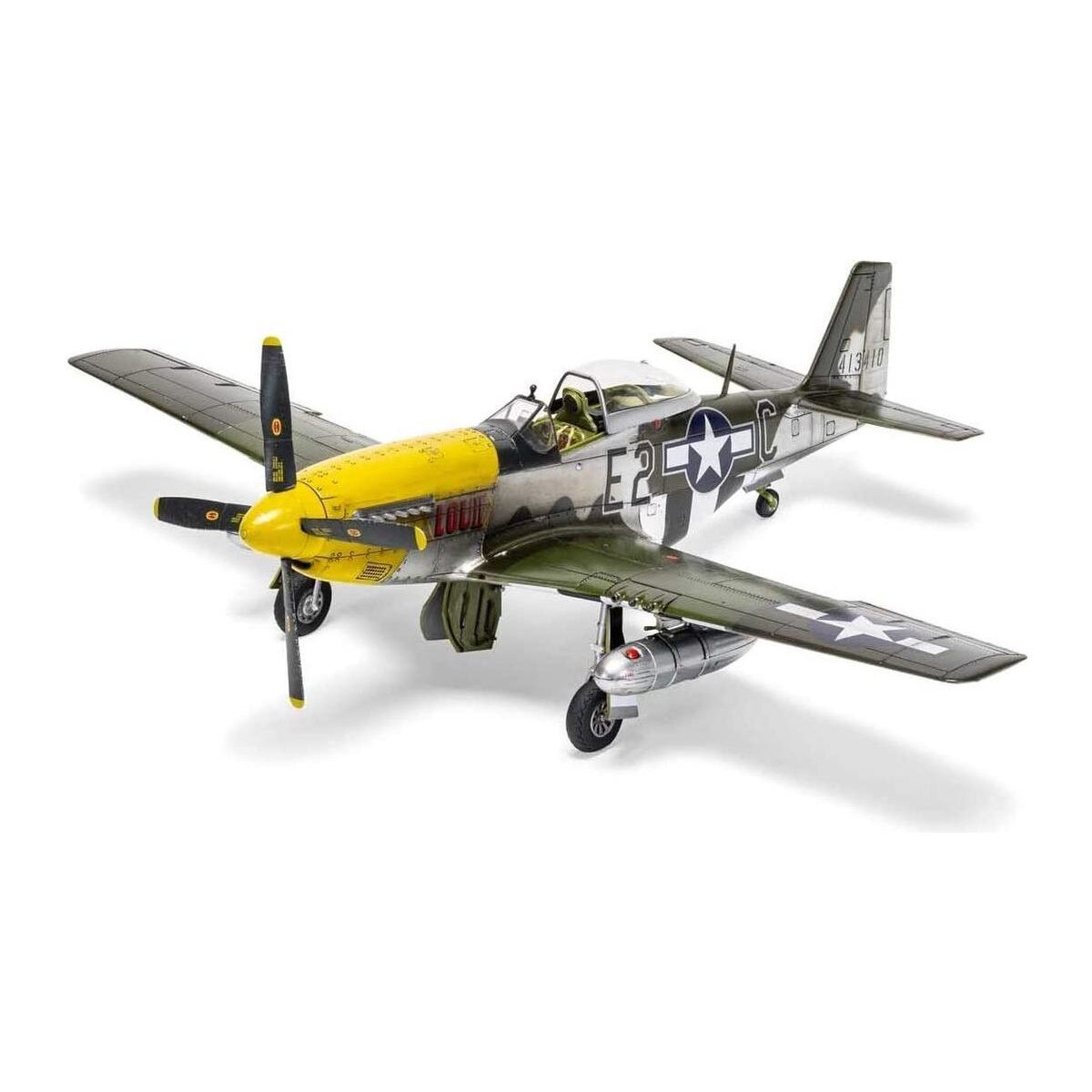
P-51D Mustang - Yellow Nose

P-51D Mustang - Yellow Nose
Hobby Boss 1:48
The North American Aviation P-51 Mustang is an American long-range, single-seat fighter and fighter-bomber used during World War II and the Korean War, among other conflicts. The Mustang was designed in 1940 by a team headed by James H. Kindelberger of North American Aviation (NAA) in response to a request from the British Purchasing Commission. The commission approached NAA to build Curtiss P-40 fighters under license for the Royal Air Force (RAF). Rather than build an old design from another company, NAA proposed the design and production of a more modern fighter. The prototype NA-73X airframe was completed on 9 September 1940, 102 days after contract signing, achieving its first flight on 26 October
P-51D
Following combat experience the P-51D series introduced a "teardrop", or "bubble", canopy to rectify problems with poor visibility to the rear of the aircraft. In the United States, new moulding techniques had been developed to form streamlined nose transparencies for bombers. North American designed a new streamlined plexiglass canopy for the P-51B which was later developed into the teardrop shaped bubble canopy. In late 1942, the tenth production P-51B-1-NA was removed from the assembly lines. From the windshield aft the fuselage was redesigned by cutting down the rear fuselage formers to the same height as those forward of the cockpit; the new shape faired in to the vertical tail unit. A new simpler style of windscreen, with an angled bullet-resistant windscreen mounted on two flat side pieces improved the forward view while the new canopy resulted in exceptional all-round visibility. Wind tunnel tests of a wooden model confirmed that the aerodynamics were sound.