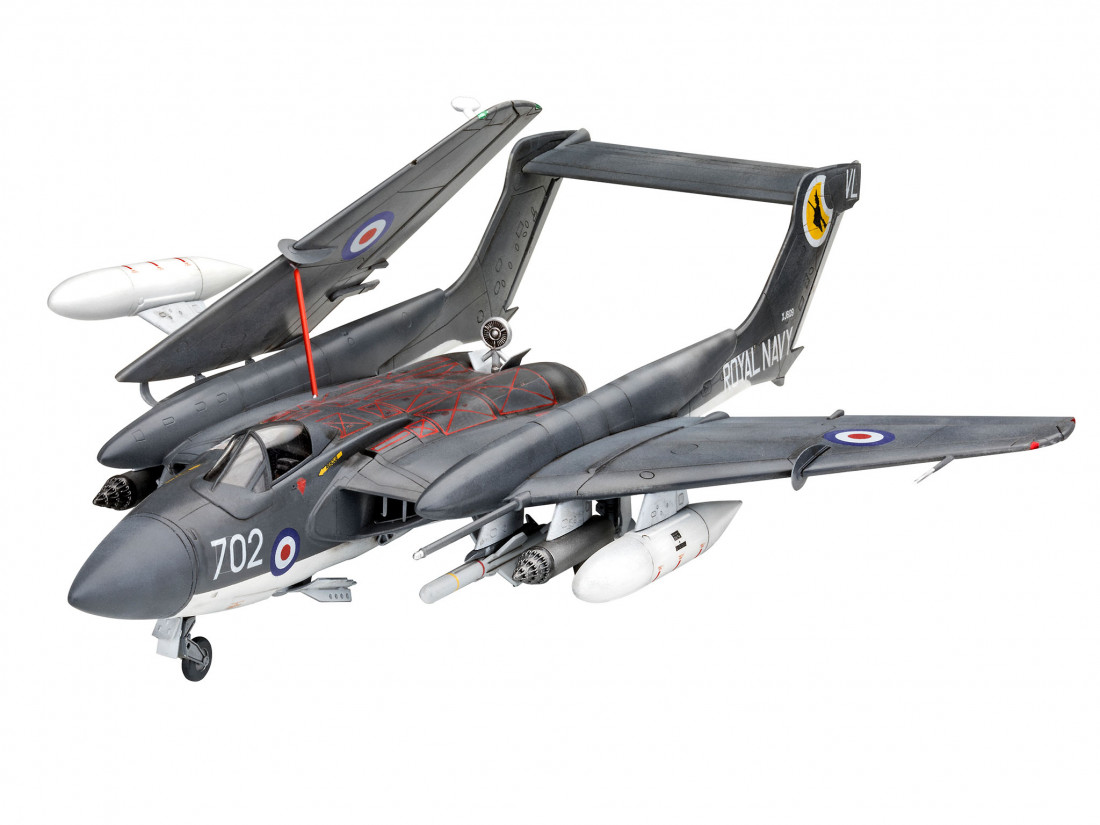
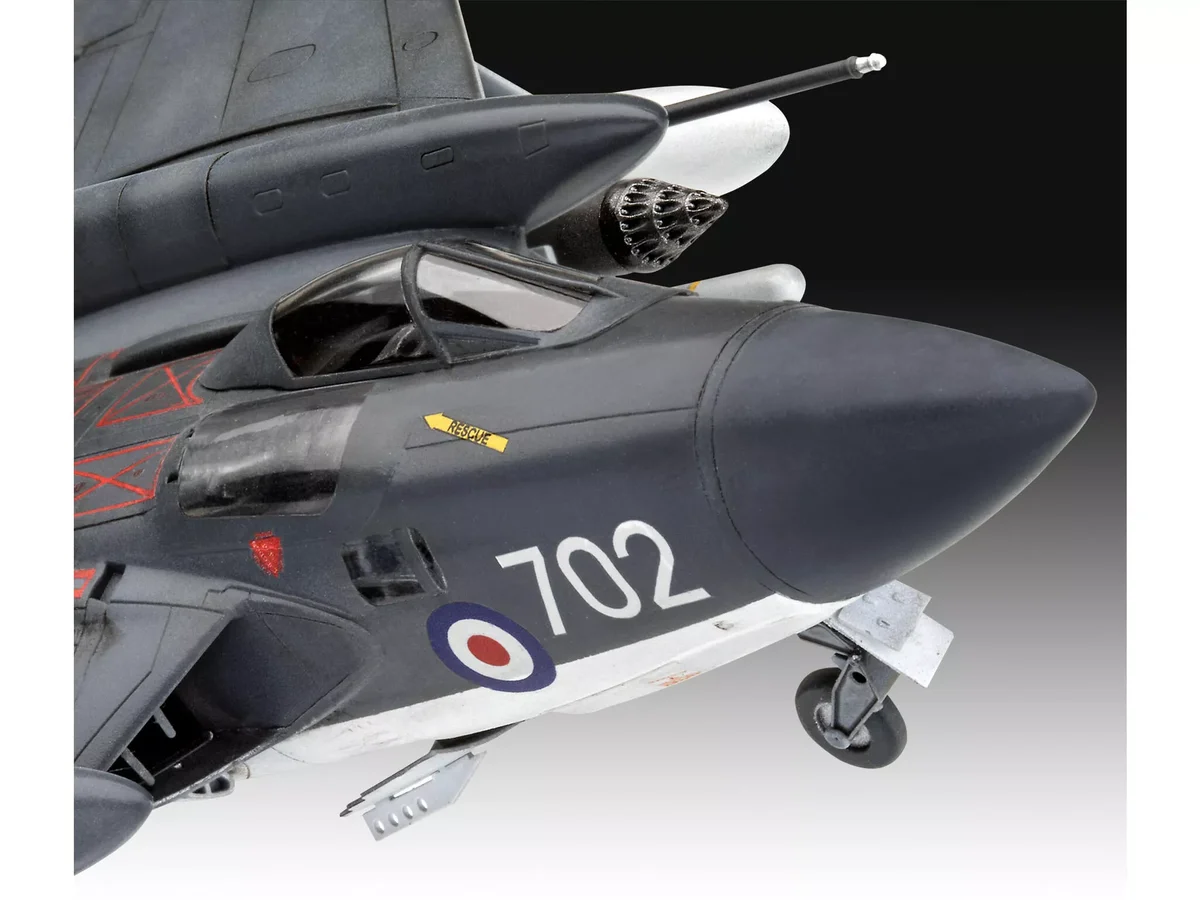
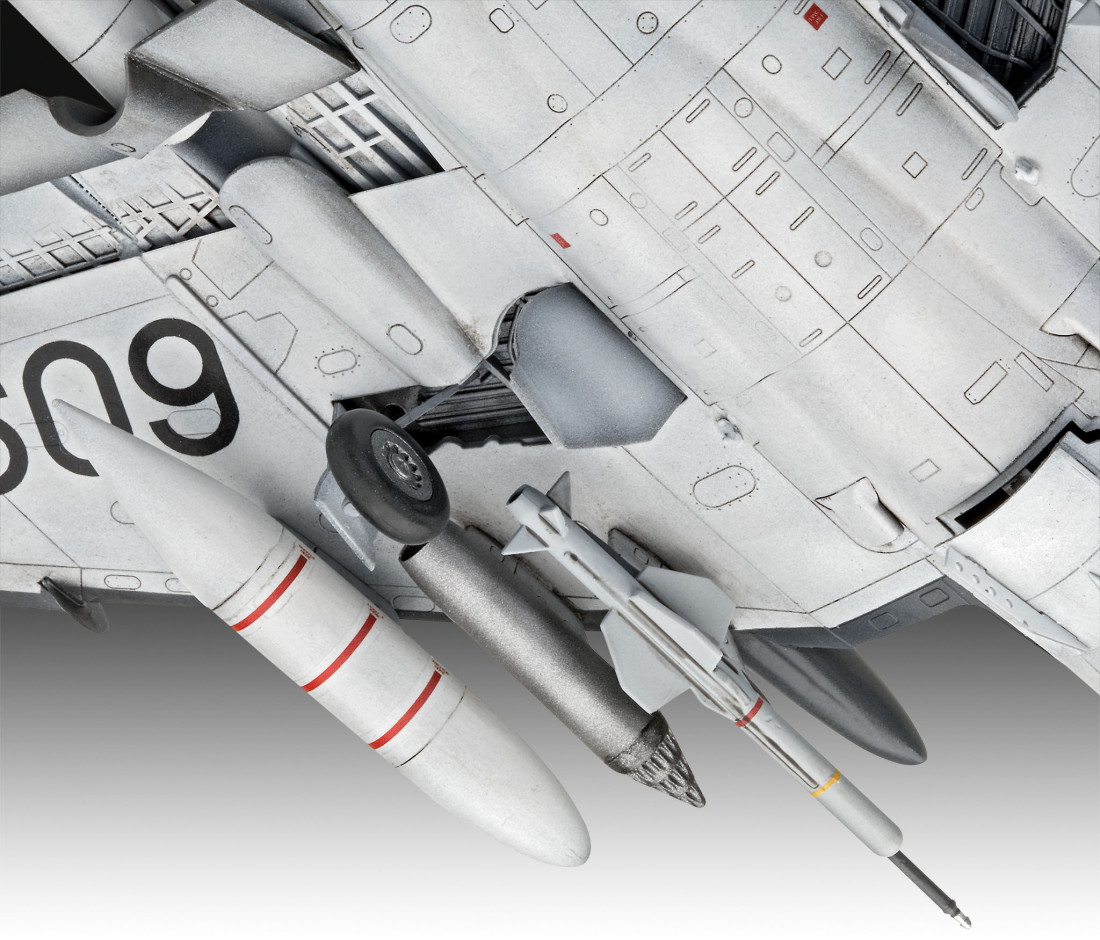
Sea Vixen FAW 2

Sea Vixen FAW 2
Revell 1/72
The de Havilland DH.110 Sea Vixen is a British twin-engine, twin boom-tailed, two-seat, carrier-based fleet air-defence fighter flown by the Royal Navy's Fleet Air Arm from the 1950s to the early 1970s. The Sea Vixen was designed by the de Havilland Aircraft Company during the late 1940s at its Hatfield aircraft factory in Hertfordshire, developed from the company's earlier first generation jet fighters. It was later called the Hawker Siddeley Sea Vixen after de Havilland was absorbed by the Hawker Siddeley Corporation in 1960.
The Sea Vixen had the distinction of being the first British two-seat combat aircraft to achieve supersonic speed, albeit not in level flight. Operating from British aircraft carriers, it was used in combat over Tanganyika and over Yemen during the Aden Emergency. In 1972, the Sea Vixen was phased out in favour of the American-made McDonnell Douglas Phantom FG.1 interceptor. There have been no flying Sea Vixens since 2017.
Beyond the initial FAW.1 model, de Havilland proceeded with the development of an improved variant, which was subsequently designated as the Sea Vixen FAW.2. This served as the successor to the FAW.1 and included many improvements. As well as Firestreak missiles, it could carry the Red Topair-to-air missile, four SNEB rocket pods, and the AGM-12 Bullpupair-to-ground missile.
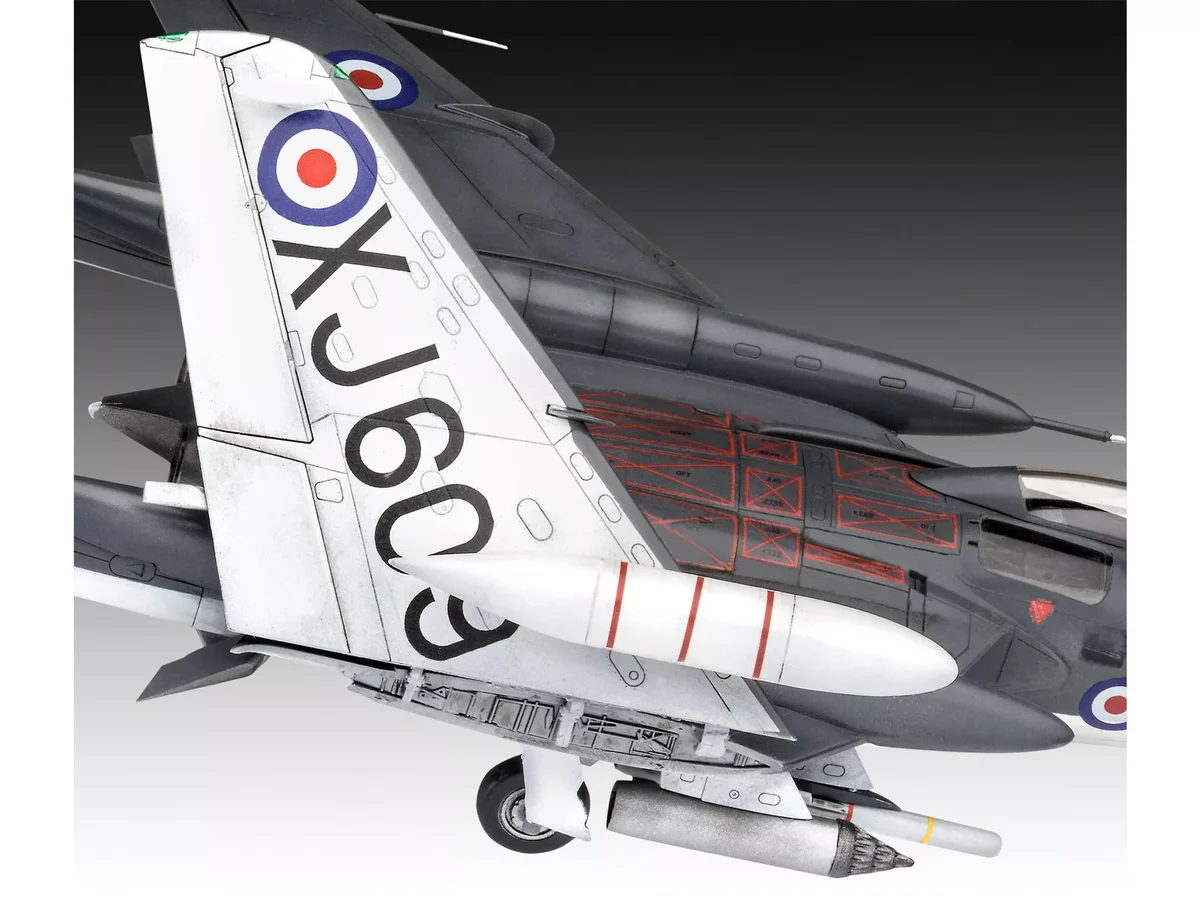
Its enlarged tail boom allowed for additional fuel tanks in the
"pinion" extensions above and in front of the wing leading edge, there
was an improved escape system and additional room for more electronic countermeasures (ECM) equipment. However, the changes in aerodynamics meant that the 1,000 lb bomb could
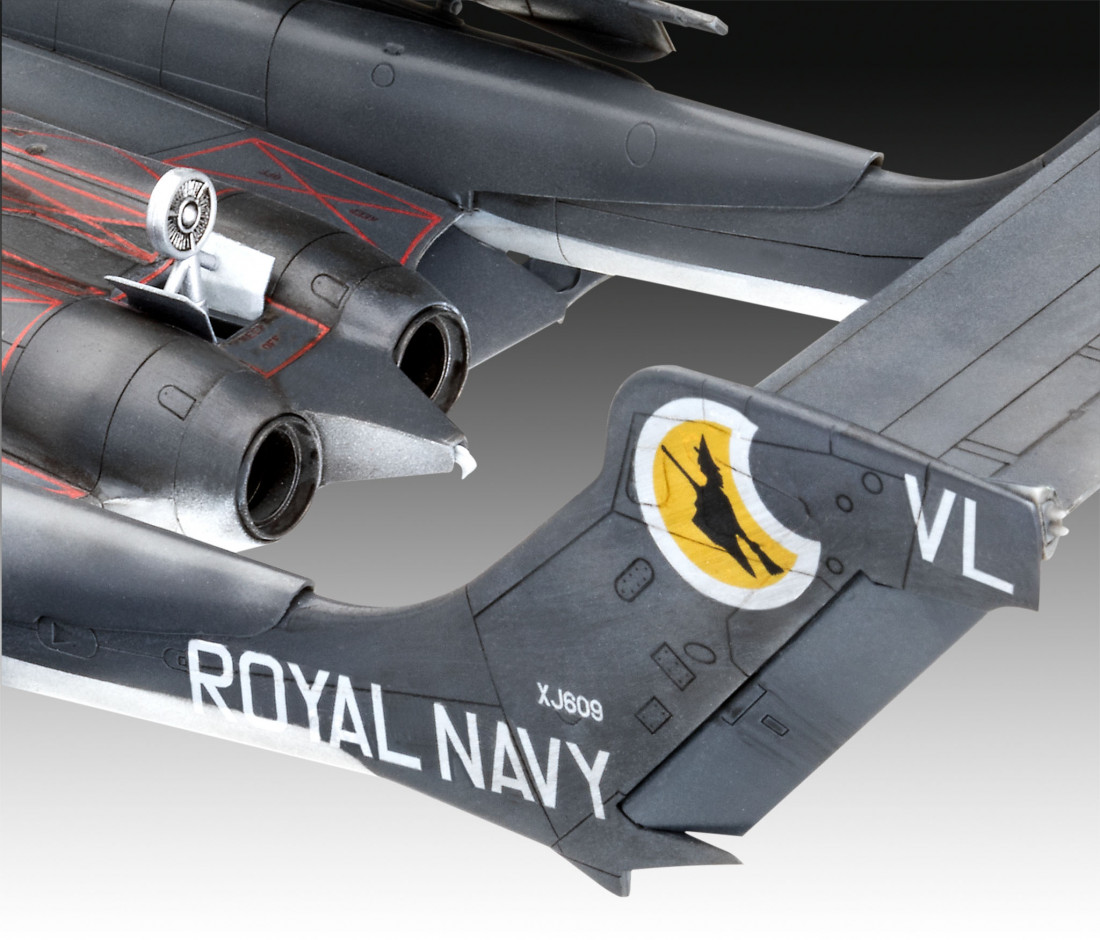
no longer be carried. Visually the FAW.1 and FAW.2 could be
distinguished by the tail booms which extended forward over the wing
leading edges of the FAW.2.
In 1962, the Sea Vixen FAW.2 conducted its maiden flight; the type
entered service with frontline squadrons in 1964. Overall, a total of 29
FAW.2s were newly built along with a further 67 FAW.1s that were
rebuilt and upgraded to FAW.2 standard. In 1966, the original FAW.1
begun to be phased out. In 1972, the career of the Sea Vixen FAW.2 came
to an end.