Dornier Do 335 A Fighter Bomber

Dornier Do 335 A Fighter Bomber
Tilaustuote. Toimitus 2-3 viikkoa.
Description
Was there any aircraft as unorthodox and unconventional in
appear- ance as the Dornier Do 335? Of course there was, but the Do 335
was to be a mass-produced fighter-bomber aircraft that would
have entered regular service. What made this aircraft an interesting
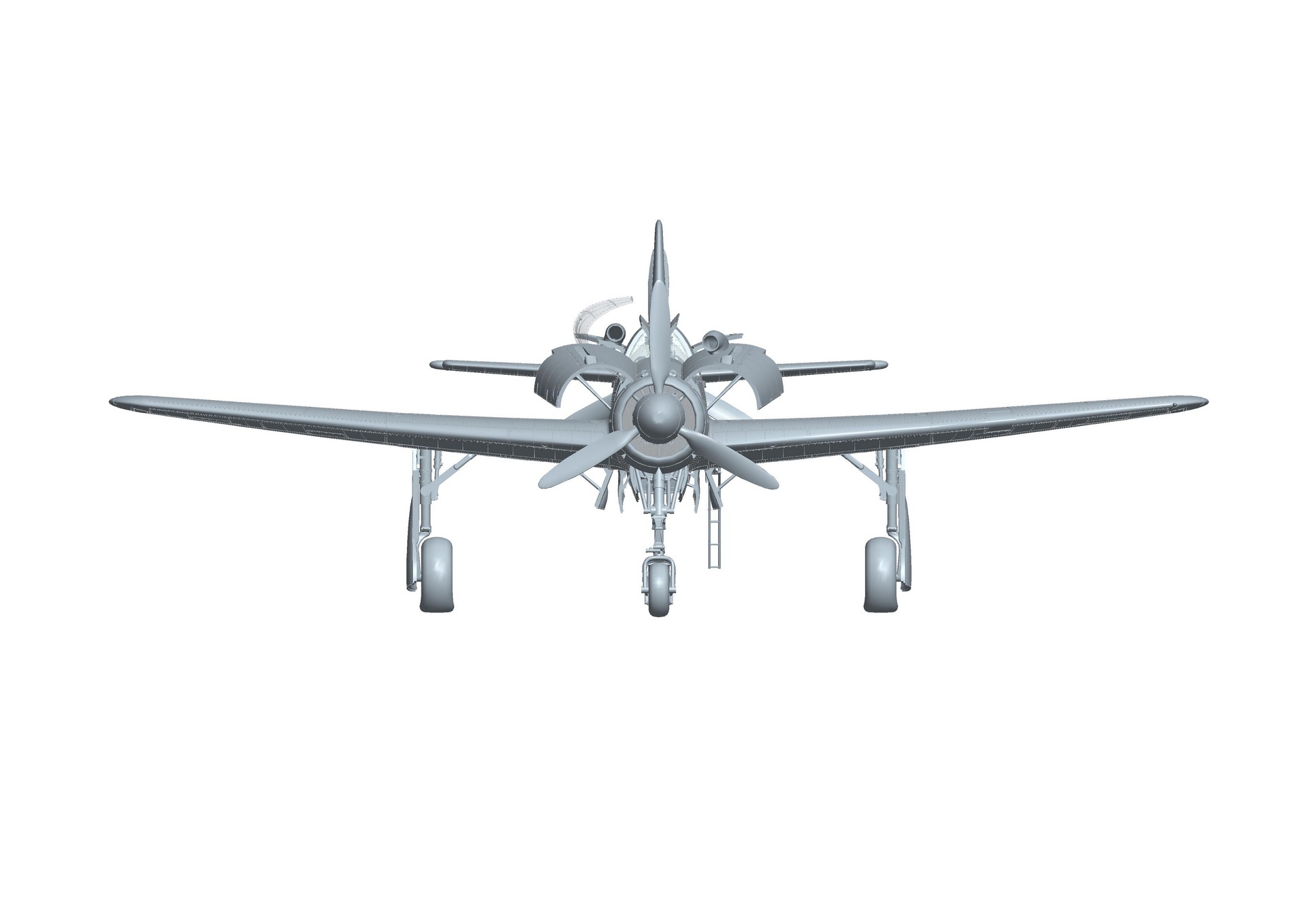
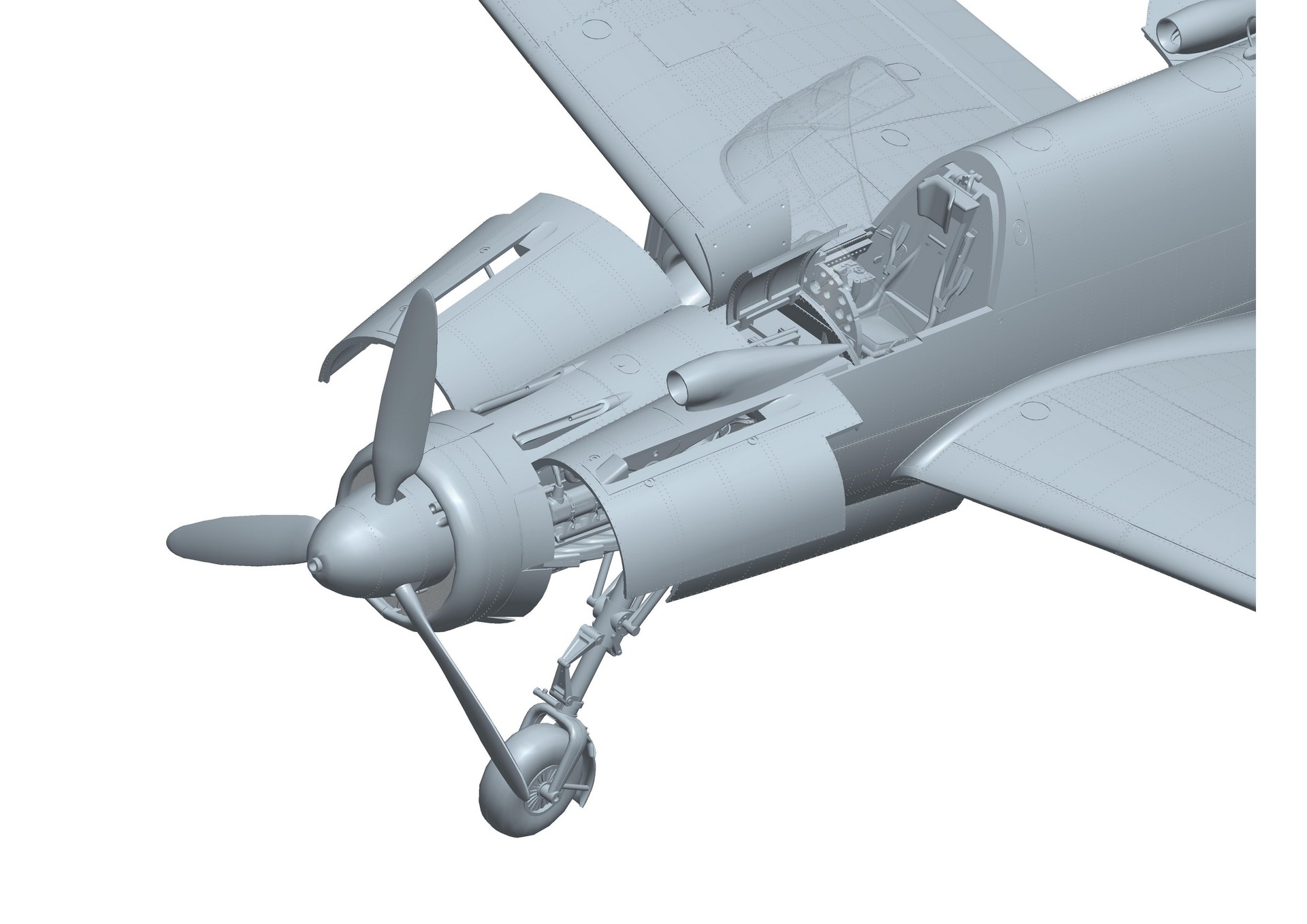
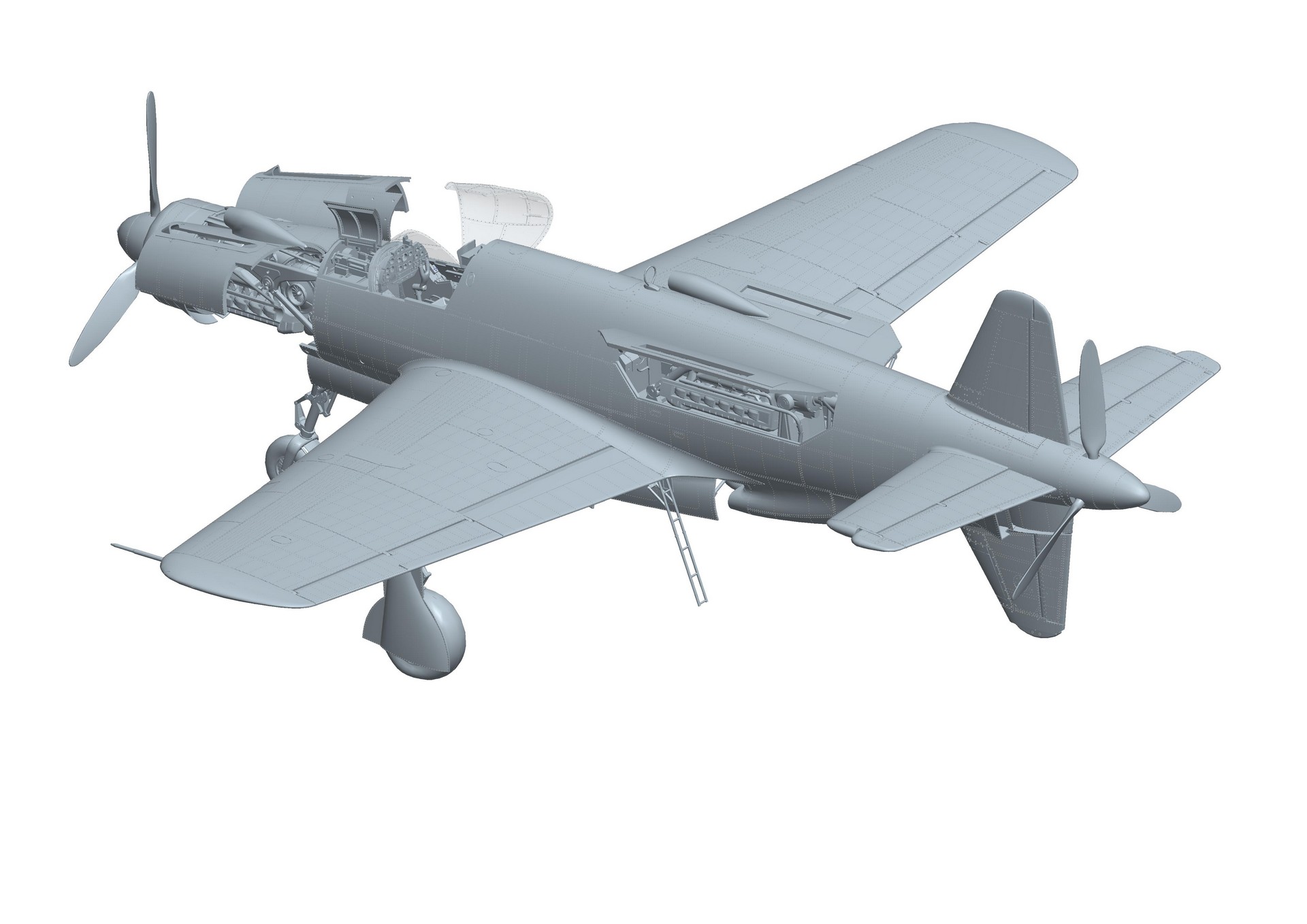
proposition was its configuration. This was indeed a two-engine design,
but centred around an unusual push-pull design. That in itself might
make the aircraft sound like a non-starter, but the Do 335 was arguably
one of, or THE fastest piston-engine aircraft that ever saw service, as
the design eliminated the traditional parasitic drag element that was
typical for a standard two-engine design layout. It was also very
versatile. Conceived from the outset as a multirole machine, this
adaptable design could be used as a straight fighter aircraft, and also
as a night-fighter, complete with a second, tandem crew position that
gave that version of the Do 335 its distinctive humpback appearance.
Bombs could also be carried in an internal bay, and if you required a
heavy fighter, then this was possible by mounting two MK103 cannon in
two wing-mounted pods that protruded from the wing leading edge (HK
Models kit #01E07).
The Do 335 was also a robust and highly manoeuvrable machine, and
one that could actually cope with a rear engine failure. It was also one
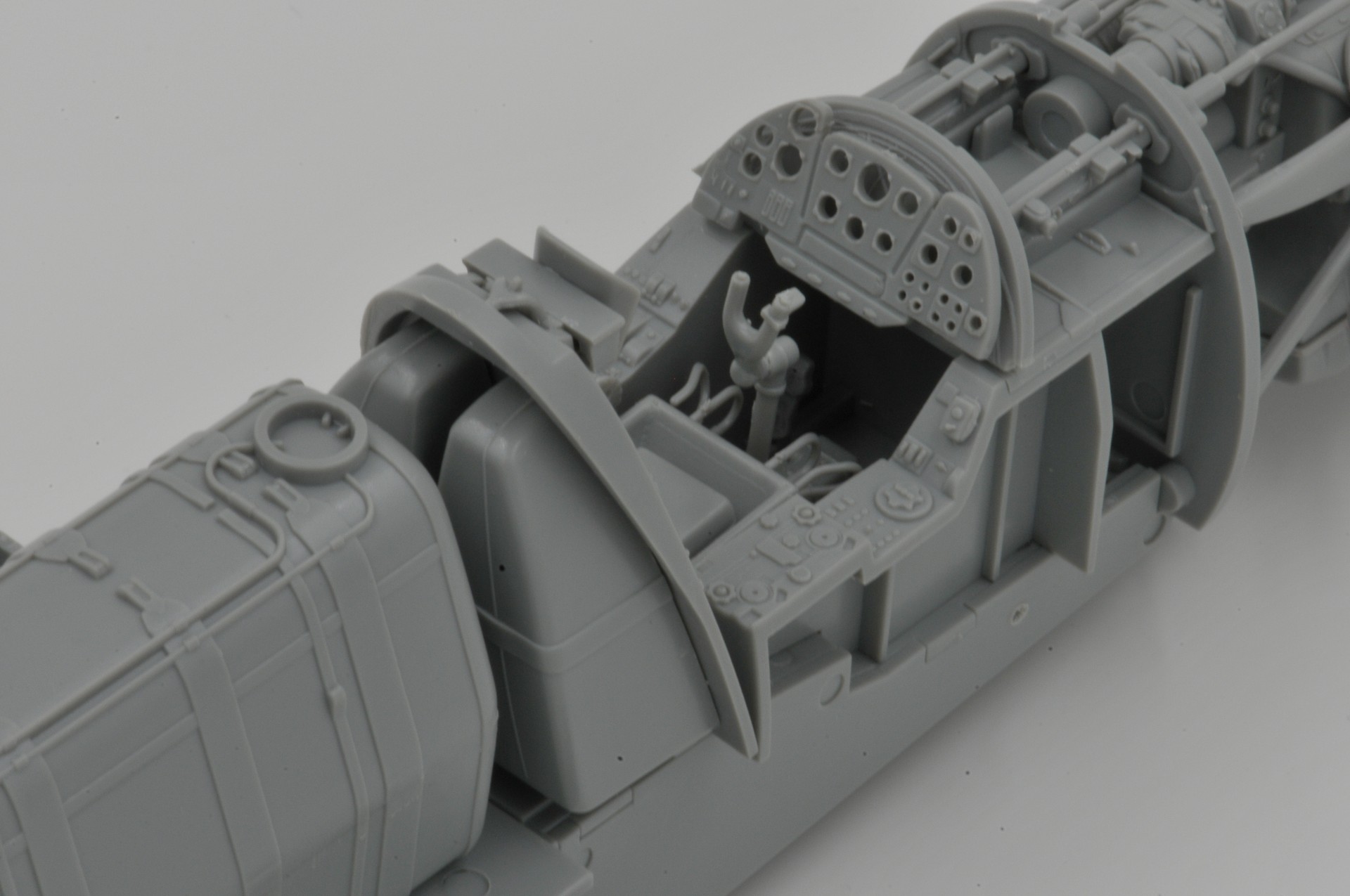
of the few aircraft of the time that was fitted with an ejection seat.
Should this need to be used, the canopy, rear pro- peller and upper tail
fin would be blasted away bythe use of explosive bolts, preventing the
pilot from striking them on his way out. Another unusual feature of this
aircraft was the cruciform tail layout. A downward pointing fin was
included, which would hopefully negate any possible rear propeller
damage that could result from an awkward landing. First flown in 1943,
the project wasn’t without its problems. Whilst the aircraft was in-
herently stable on both ground and in the air, due to the rear engine
resting behind the centre of gravity, it did suffer from some technical
issues that were never overcome, such as a weak undercarriage. Despite
the great hopes that the Nazis had for the Do 335, like many of their
wonder designs, it simply came too late to make any difference, with
only 37 being built by the war’s end. Allies evaluation of this Do 335
‘Pfeil’ showed that it was an excellent performer and could have been a
serious opponent, had it not been for Germany’s lack of production
capability and onerous bureaucratic and person- al in-fighting. The
subject of this kit release is the standard A-0/1 fighter-bomber. This
is the version of machine seen today at the NASM, who own the last
surviving example of the Do 335.