
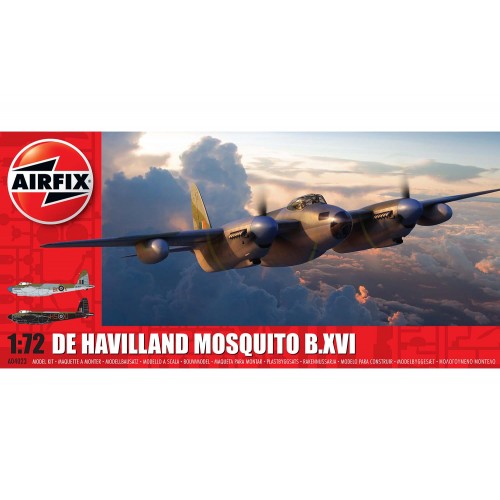
The de Havilland DH.98 Mosquito is a British twin-engined, shoulder-winged, multirole combat aircraft, introduced during the Second World War. Unusual in that its frame was constructed mostly of wood, it was nicknamed the "Wooden Wonder",[4] or "Mossie". Lord Beaverbrook, Minister of Aircraft Production, nicknamed it "Freeman's Folly", alluding to Air Chief Marshal Sir Wilfrid Freeman, who defended Geoffrey de Havilland and his design concept against orders to scrap the project. In 1941, it was one of the fastest operational aircraft in the world
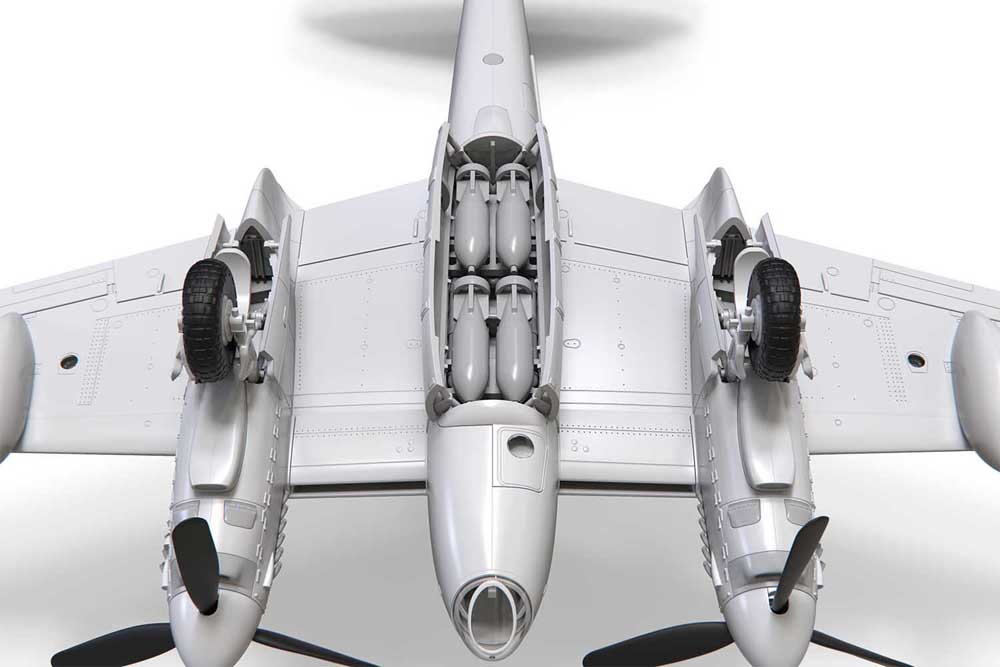
The B Mk XVI was powered by the same variations as the B.IX. All B
Mk XVIs were capable of being converted to carry the 4,000 lb
(1,800 kg) "Cookie". The two-stage powerplants were added along with a pressurised cabin. DZ540 first flew on 1 January 1944. The prototype was converted from a IV (402 built). The next variant, the B Mk XX,
was powered by Packard Merlins 31 and 33s. It was the Canadian version
of the IV. Altogether, 245 were built. The B Mk XVI had a maximum speed
of 408 mph (657 km/h), an economical cruise speed of 295 mph (475 km/h)
at 20,000 ft, and 350 mph (560 km/h) at 30,000 ft, ceiling of 37,000 ft (11,000 m), a range of 1,485 nmi (2,750 km), and a
climb rate of 2,800 ft per minute (853 m). The type could carry
4,000 lb (1,800 kg) of bombs.
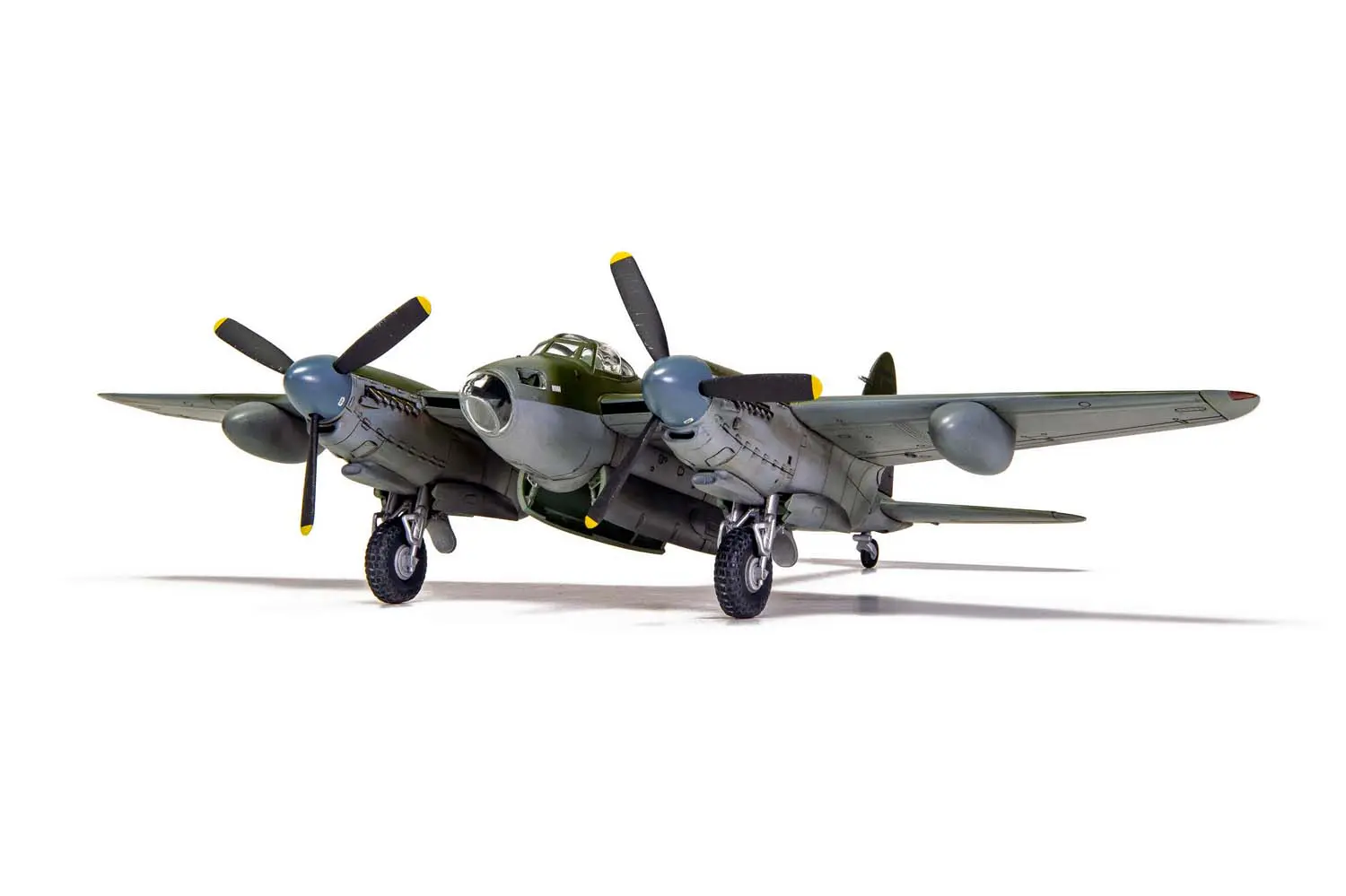
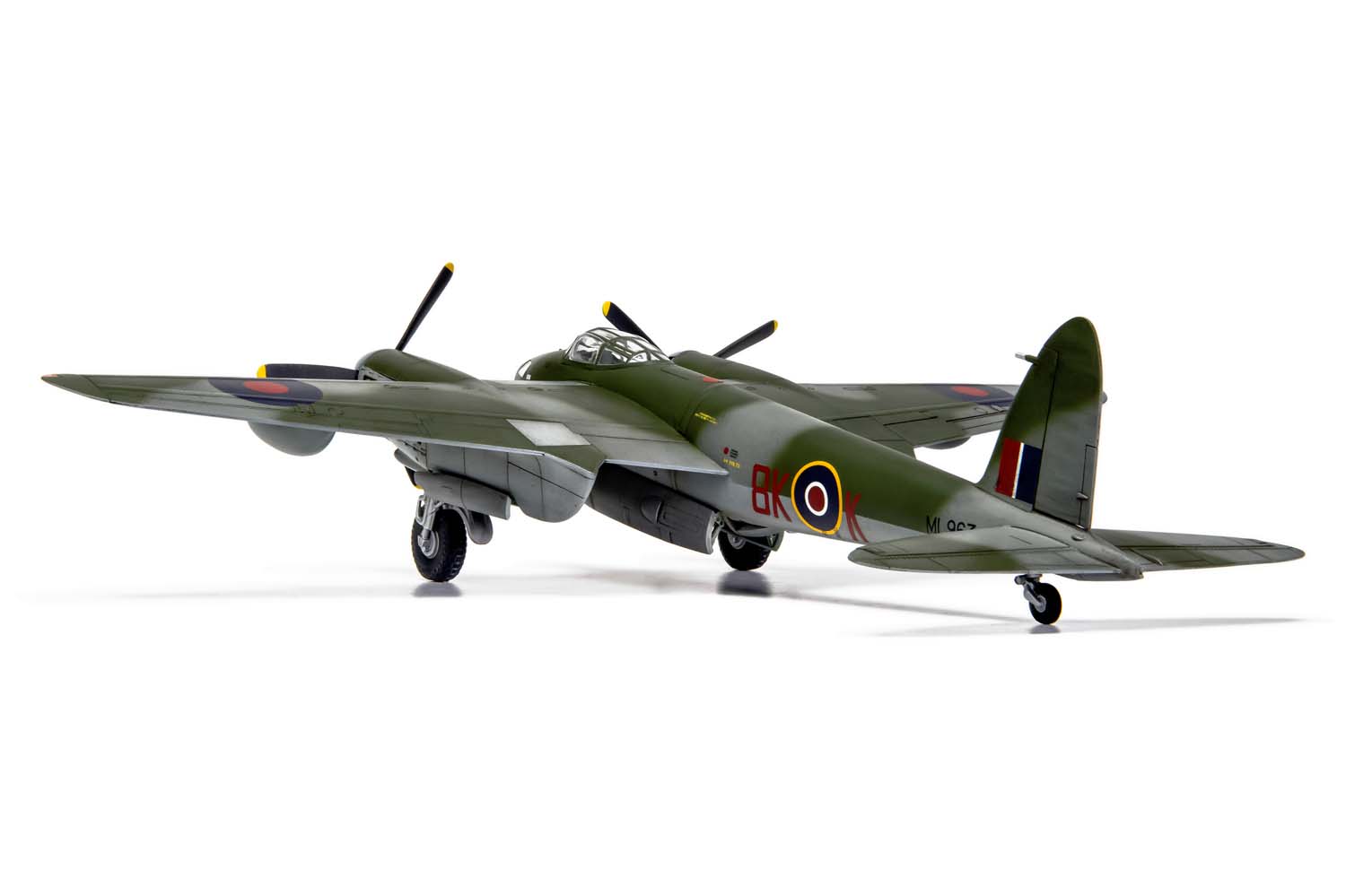


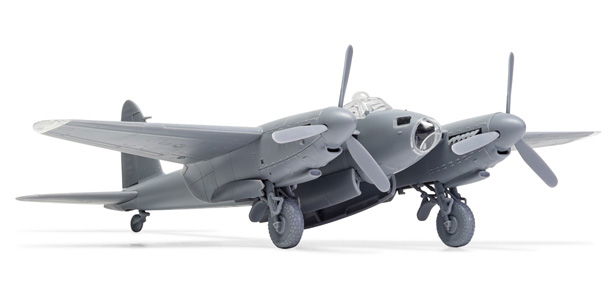
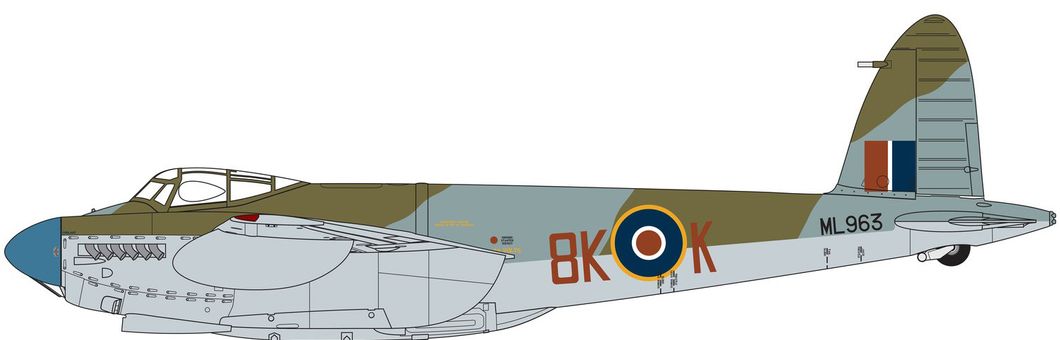
A - de Havilland Mosquito B.XVI No, 571 Squadron, No 8 (pathfinder) Group, Royal Air Force Oakington, Cambridgeshire, England, September 1944
A - de Havilland Mosquito B.XVI No, 571 Squadron, No 8 (pathfinder) Group, Royal Air Force Oakington, Cambridgeshire, England, September 1944
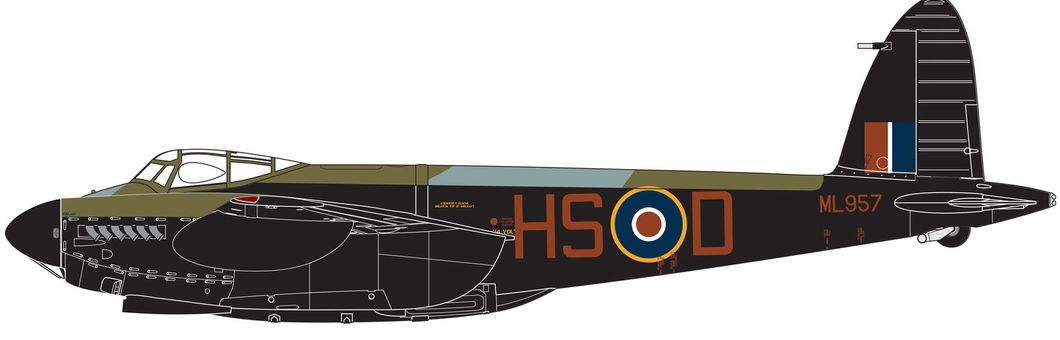
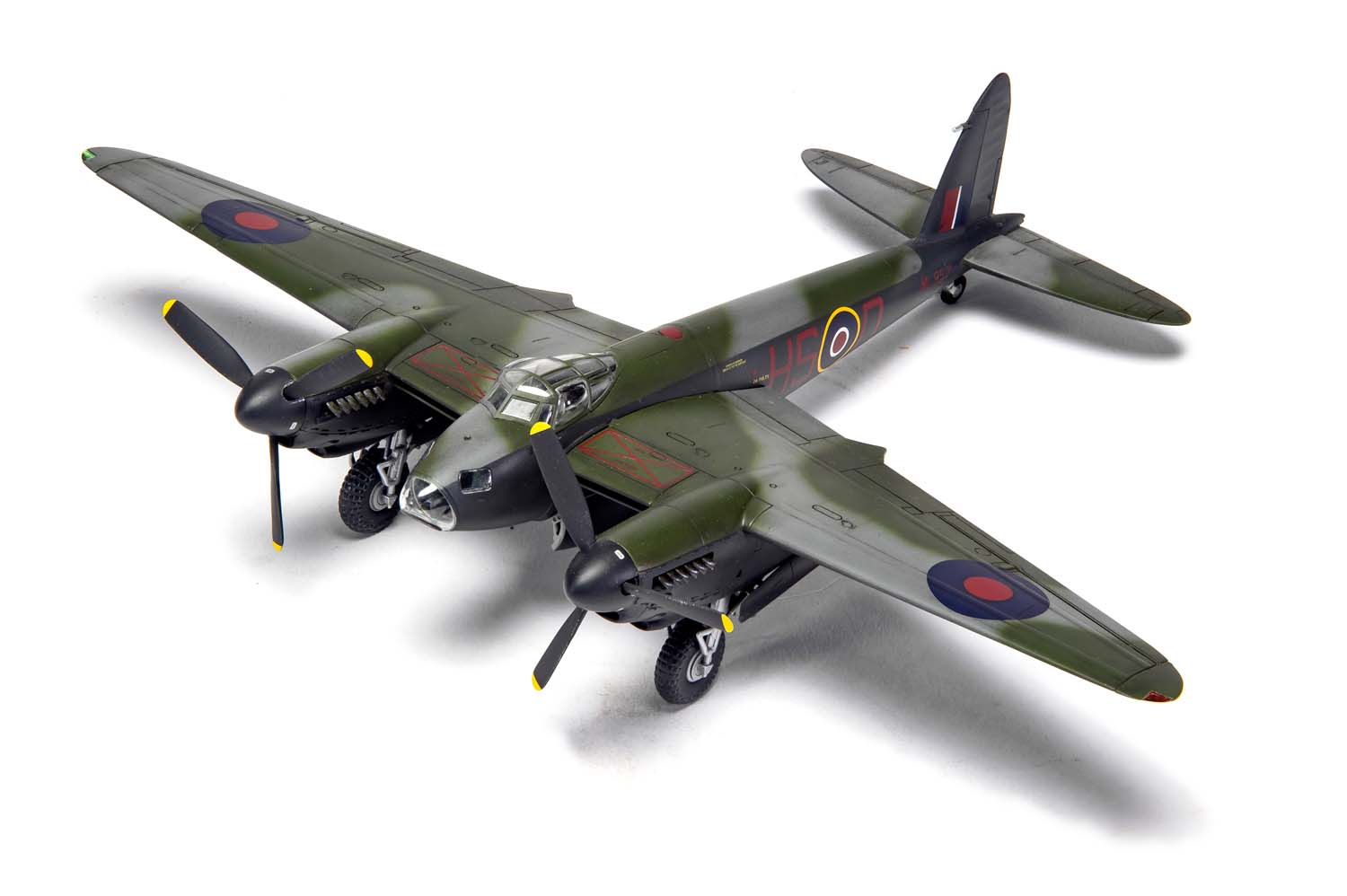
B - de Havilland Mosquito B.XVI No. 109 Squadron , Royal Air Force Wyton, Cambridgeshire, England, 1944
B - de Havilland Mosquito B.XVI No. 109 Squadron , Royal Air Force Wyton, Cambridgeshire, England, 1944
Katso myös nämä tuotteet
