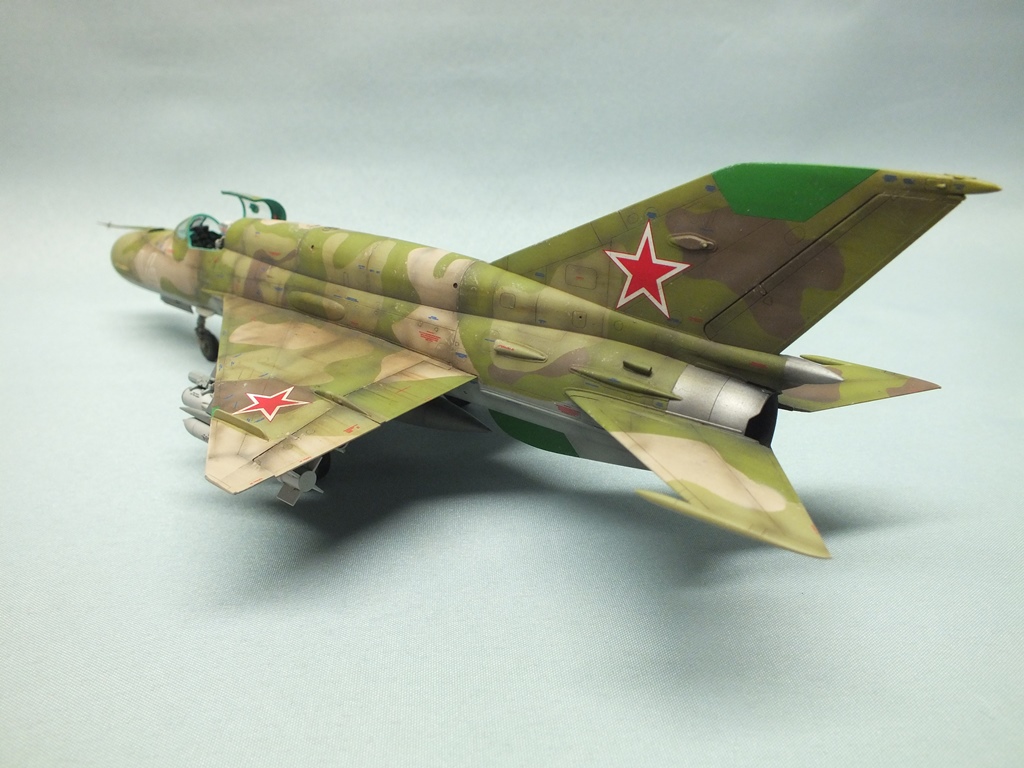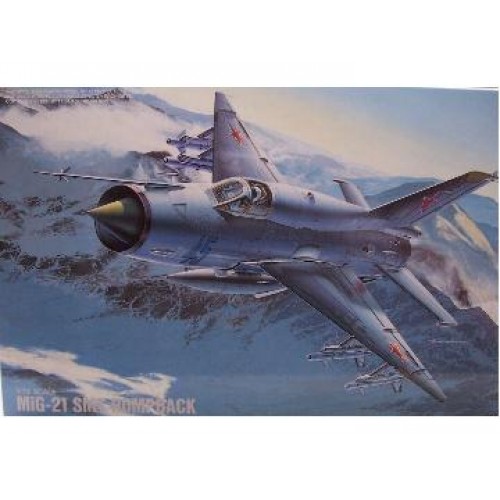
Fujimi 1:72
The Mikoyan-Gurevich MiG-21 (Russian: Микоян и Гуревич МиГ-21; NATO reporting name: Fishbed) is a supersonic jet fighter and interceptor aircraft, designed by the Mikoyan-Gurevich Design Bureau in the Soviet Union. Its nicknames include: "Balalaika", because its planform resembles the stringed musical instrument of the same name; "Ołówek", Polish for "pencil", due to the shape of its fuselage, and "Én Bạc", meaning "silver swallow", in Vietnamese.
Approximately 60 countries across four continents have flown the MiG-21, and it still serves many nations seven decades after its maiden flight. It set aviation records, becoming the most-produced supersonic jet aircraft in aviation history, the most-produced combat aircraft since the Korean War and, previously, the longest production run of any combat aircraft.
MiG-21SMT (1971; Izdeliye 50; NATO "Fishbed-K")
S = Sapfir (referring to the Sapfir-21/RP-22 radar), M = Modernizirovannyy ("Modernised"), T = Toplivo ("Fuel," referring to increased fuel capacity)
A development of the MiG-21SM with increased fuel capacity. This variant is easily spotted thanks to its larger spine, which made it unpopular with pilots as it was much harder to fly.