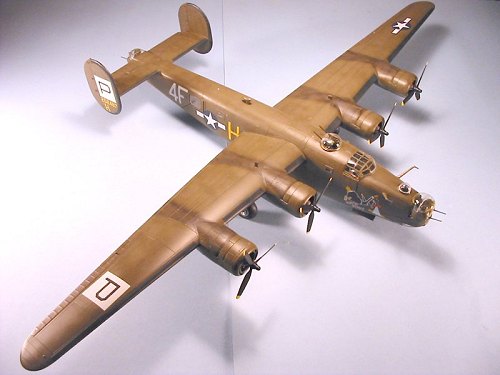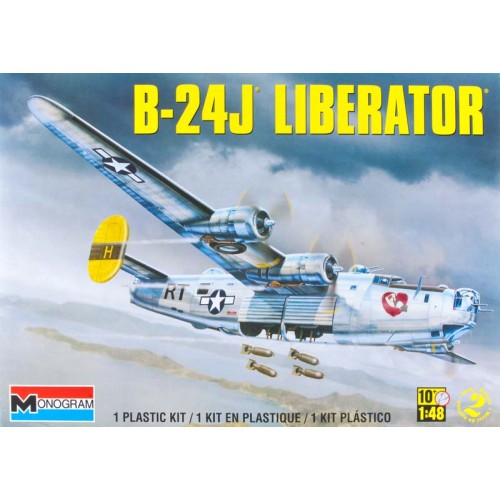
Monogram 1/48
The Consolidated B-24 Liberator is an American heavy bomber, designed by Consolidated Aircraft of San Diego, California. It was known within the company as the Model 32, and some initial production aircraft were laid down as export models designated as various LB-30s, in the Land Bomber design category.
At its inception, the B-24 was a modern design featuring a highly efficient shoulder-mounted, high aspect ratio Davis wing. The wing gave the Liberator a high cruise speed, long range and the ability to carry a heavy bomb load. In comparison with its contemporaries, the B-24 was relatively difficult to fly and had poor low-speed performance; it also had a lower ceiling and was less robust than the Boeing B-17 Flying Fortress. While aircrews tended to prefer the B-17, General Staff favored the B-24 and procured it in huge numbers for a wide variety of roles. At approximately 18,500 units – including 8,685 manufactured by Ford Motor Company – it holds records as the world's most produced bomber, heavy bomber, multi-engine aircraft, and American military aircraft in history.
- B-24J
- The B-24J was similar to the B-24H, but shortages of the Emerson nose turret required use of a modified, hydraulically powered Consolidated A-6 turret in most J model aircraft built at Consolidated's San Diego and Fort Worth factories. The B-24J featured an improved autopilot (type C-1) and a M-1 series bombsight. B-24H sub-assemblies made by Ford and constructed by other companies and any model with a C-1 or M-1 retrofit, were all designated B-24J. The J model was the only version to be built by all five factories involved in B-24 production. (Total: 6,678)