|
|
In the course of the first program for motorising the Reichswehr
from 1926, development of three-axle cross-country lorries with a
payload of 3 tons was demanded besides others. Three companies were
involved in the development: Büssing, Henschel and Krupp. The first Henschel model - the Henschel type 33 B 1
- was delivered in 1928. The civilian version of this model had single
tyres on all axles and disc rims. The vehicles delivered to the Reichswehr
had spoke rims with three spokes and dual tyres on the rear axles. In
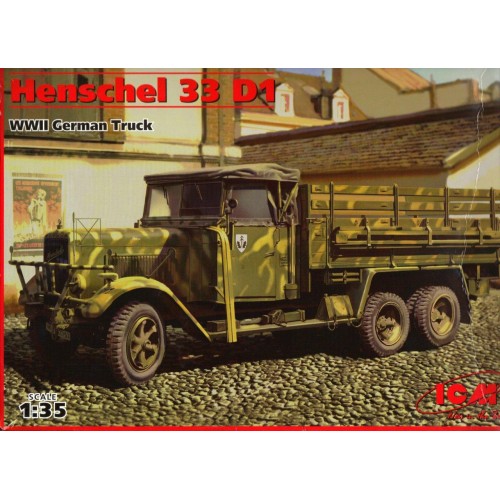
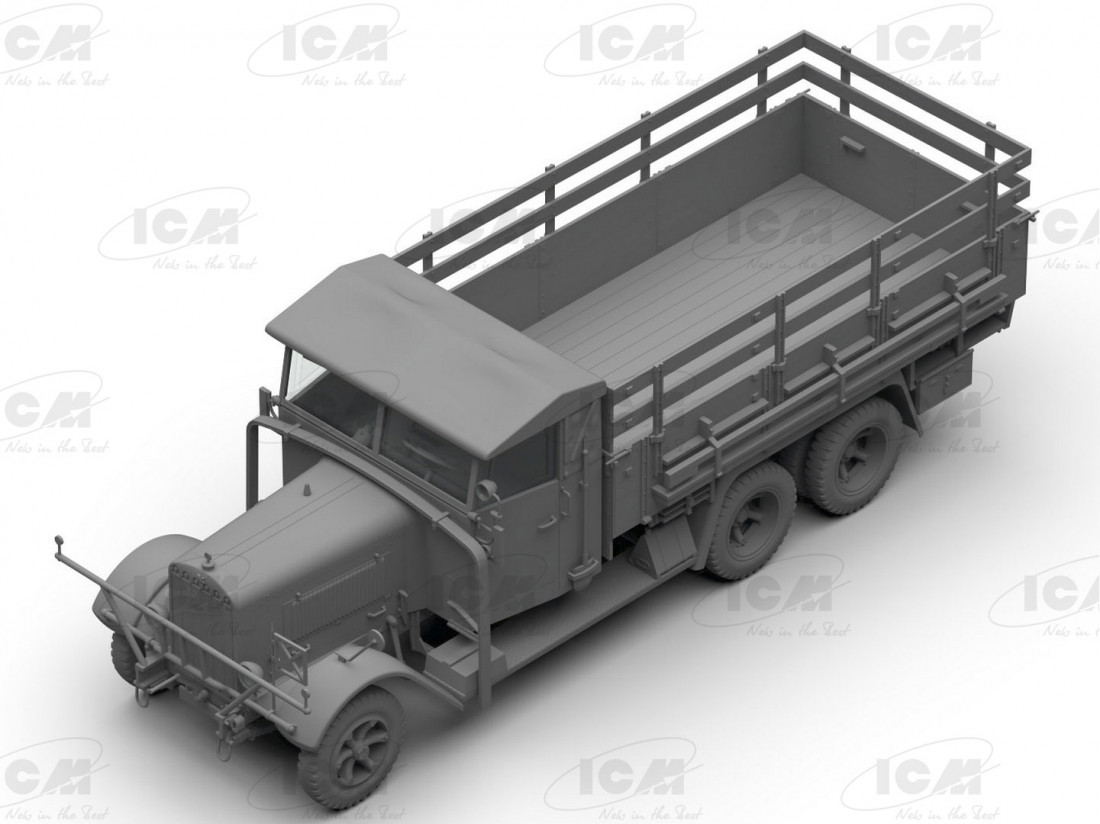
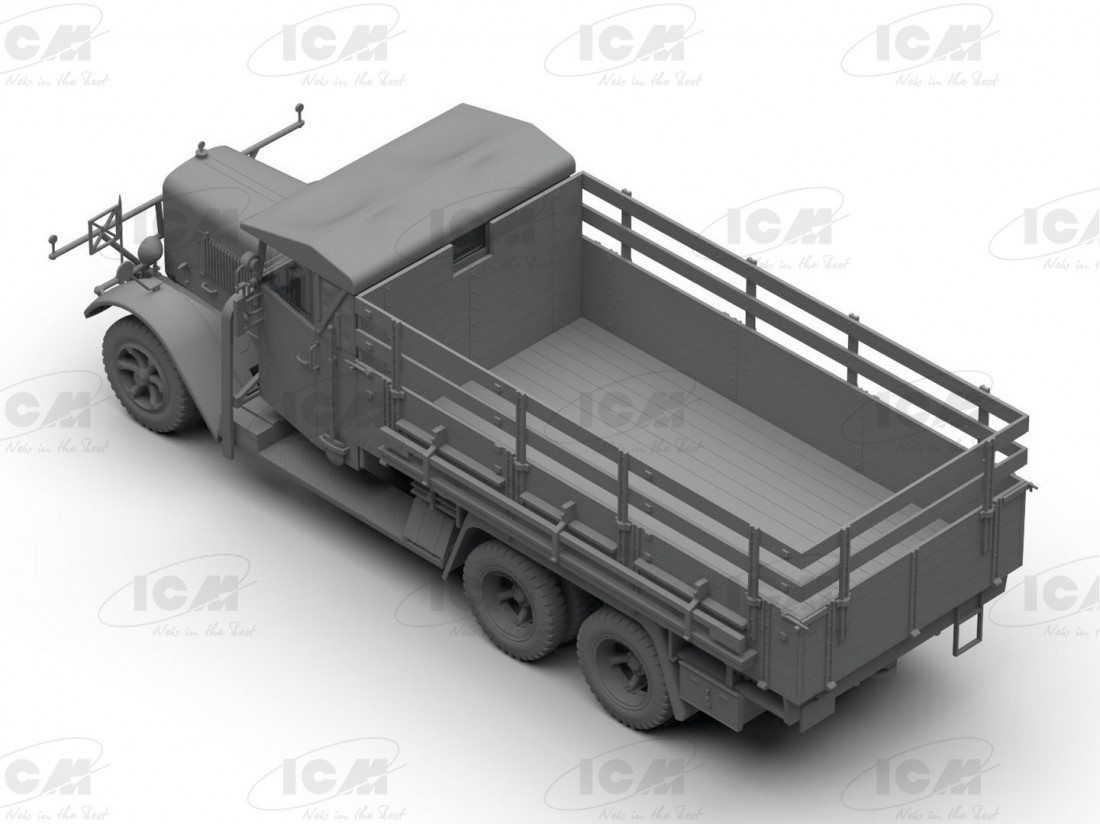
relation, a three-axle omnibus chassis was also developed in 1928 - the Henschel type 34 D 3. In 1929, the Henschel type 33 D 1 with the stronger D engine entered serial production. The Reichswehr procured only small numbers of this type. Compared to the Henschel type 33 B 1, the Henschel type 33 D 1 had a longer engine bonnet. Beginning in 1933, the Henschel type 33 D 2
was manufactured in small numbers. This version had a lengthened
wheelbase and a payload of 4 to 5 tons. Most probably, this was only a
civilian model. Typical for these early models was the fact, that the
two rear axles were propelled by separate cardan shafts.
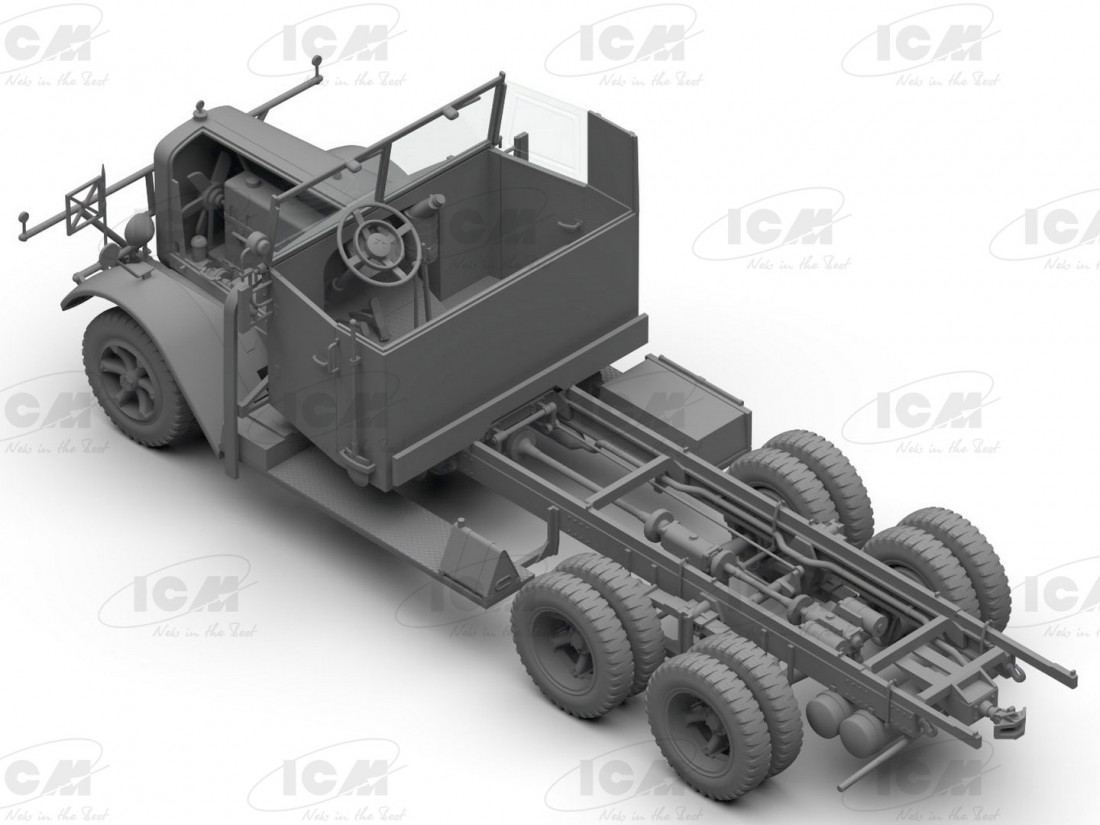
A widely improved version of the Henschel type 33 D 1
was manufactured beginning in 1934. The rear axles were now propelled
by only one cardan shaft with an additional short cardan shaft between
the rear axles. The wheelbase between the first and second axle was
increased from 3,400 to 3,750 mm. The performance characteristics were
not changed by these improvements. Simplex rims with six spokes were introduced with this model, too. Beginning in 1937, the Henschel type 33 G 1 propelled by a diesel engine was made besides the Henschel type 33 D 1. Both models were manufactured until 1943. Furthermore, the Henschel type 33 FA 1 was manufactured from 1936 to 1942. This chassis was exclusively used for the production of the Tankspritze 2,5 (Kfz. 343). It was propelled by the stronger Henschel type FA engine with a power of 126 HP. Magirus had to manufacture the Henschel type 33 G 1 under license beginning in 1937. The Magirus type 33 G 1 was manufactured from 1937 to 1941. This model had a 100 HP diesel engine. This engine had a Henschel crankcase and Deutz cylinders, cans and pistons. Therefore, this engines had the same connections like the Henschel type G diesel engine. From 1939 to 1941, the Magirus type 33 H was made. This model was propelled by a 125 HP Deutz diesel engine. No additional data about the Magirus type 33 H could be found. Probably, this chassis with the stronger engine was used for the Tankspritze 2,5 (Kfz. 343). The Henschel type 33 was chosen as a first standard type by the Wehrmacht. At least, 11,234 vehicles of the subtypes D 1, G 1 and FA 1
were made from 1934 to 1943 (there could be some more because the
available chassis number list has some gaps). Until 1934, about 400
vehicles were made. Magirus manufactured 3,870 vehicles from 1937
to 1941. No other manufacturer in this vehicle class reached such high
production figures. Therefore, many different special variants of the Henschel type 33 can be found.
Overall, the Henschel type 33
was a sturdy and solid development. Later, the insufficient
cross-country mobility caused by the dual rear tyres and the small
payload of 3 tons compared to the deadweight was criticised. In fairness
it must be said, that the famous American 2.5 ton lorries from GMC and Studebaker
had also dual tyres on the rear axles and a payload less than the half
of the deadweight. In addition, not all of these vehicles had all wheel
drive. Compared to these American opponents, the 13 year older
development Henschel type 33 performs absolutely positive.
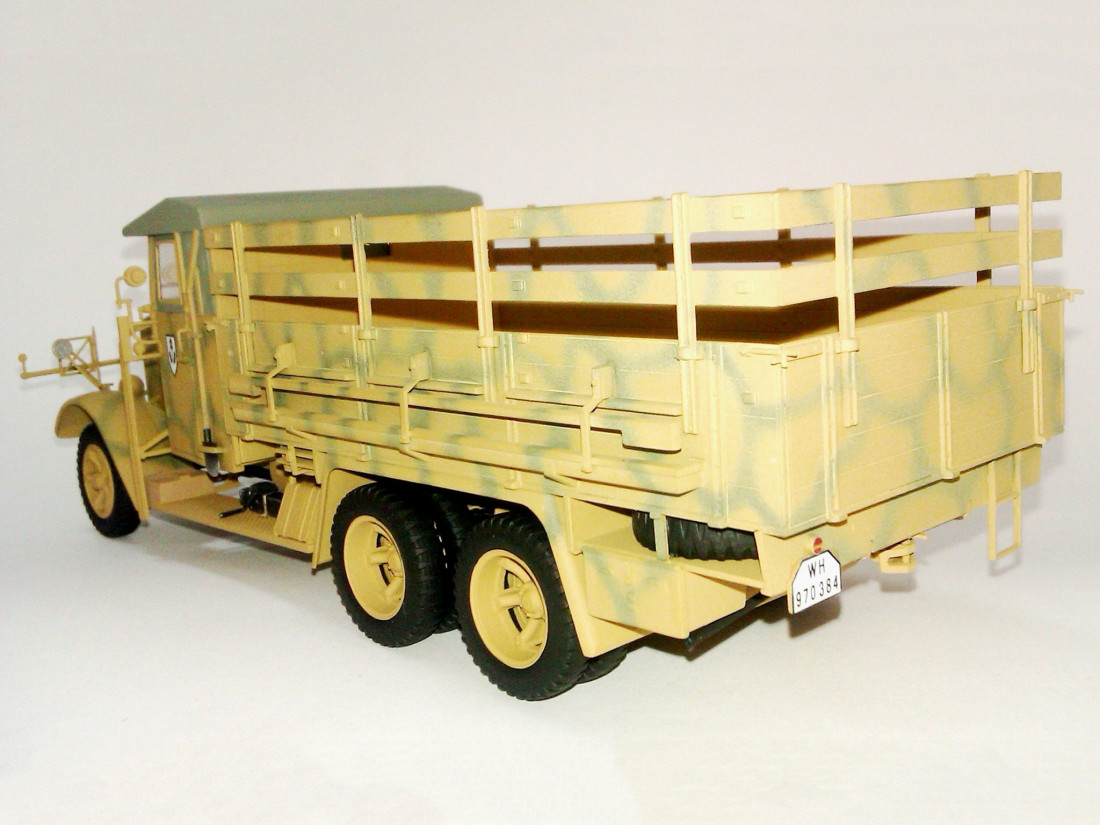
The Henschel Type 33 D 1 was made beginning in 1929. Contrary to the Henschel Type 33 B 1 it had the stronger D engine with a capacity of 10.8 litres and a power of 100 HP. For the most part, the chassis was identical to the chassis of the Type 33 B 1. Outwardly, the Type 33 D 1 differed from the Type 33 B 1 by the longer engine bonnet. The Reichswehr procured only a limited number of the Henschel Type 33 D 1. In the year 1934, a basically new designed chassis for the Henschel Type 33 D 1 was introduced. |